
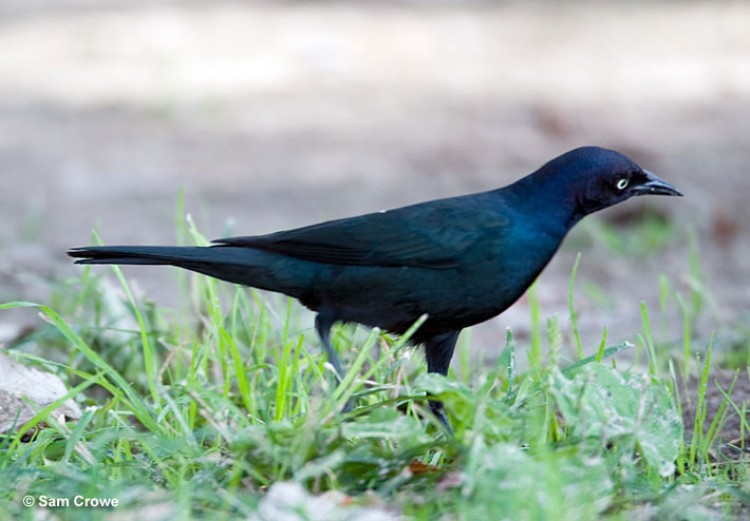

The Brewer’s Blackbird is a medium-sized blackbird with a dark, sharp beak, and a longish, squared tail. Males are glossy black with pale eyes, and females are dark, brownish-gray with dark eyes.
Brewer’s Blackbirds breed from British Columbia east to Ontario, and south to California and New Mexico. Wintering flocks feed in farm fields and other open habitats in western Canada, the western and southern USA, and Mexico.
If you see groups of blackbirds in open habitats with square tails and sharp, thin bills, you could be seeing this species.
Identification
Around the same size as a Red-winged Blackbird, the male Brewer’s Blackbird is a glossy, all-black bird with purple highlights on its head and metallic green highlights on its body. It also has pale eyes and medium to long wings. In winter, the male has some brown on its head.
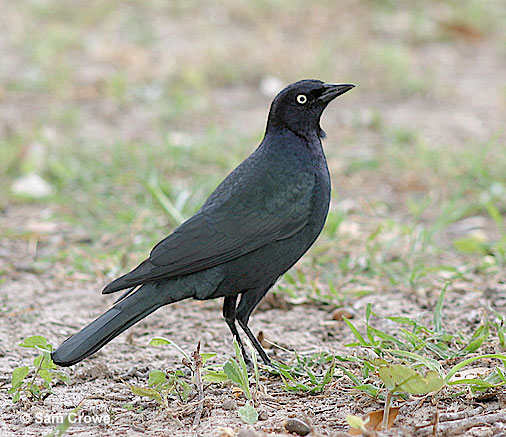
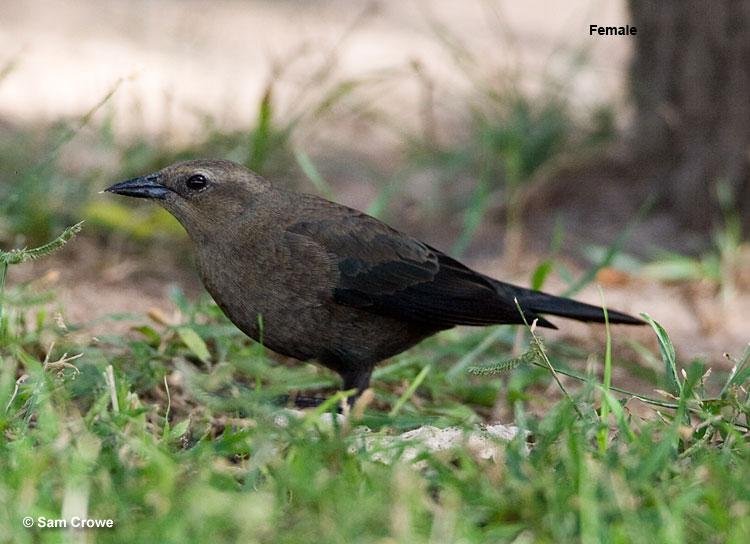
The female Brewer’s Blackbird is a dull, brown-gray bird with a sharp, dark bill, and blackish wings and tail. Most females have dark eyes, although occasional individuals have pale eyes.
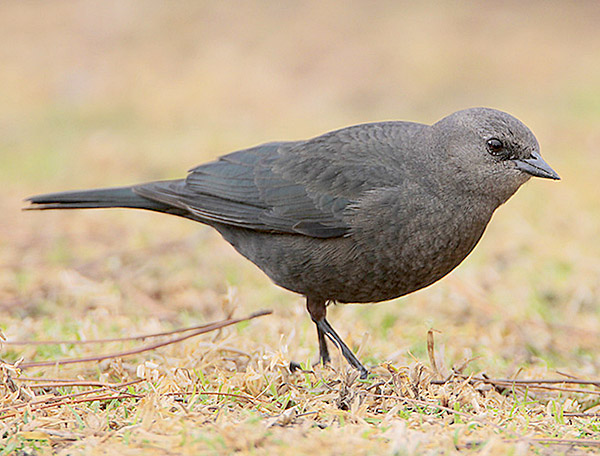
Female Brewers Blackbird
On average, this species is 9 inches long, has a wingspan of 15.5 inches, and weighs 2.2 ounces. Males are a bit larger than females. Sometimes, with a direct comparison, this difference in size is visible.
Juvenile male Brewer’s Blackbirds look like females with glossy black blotches and pale eyes.
In general, this blackbird species has an “average” bird shape with medium to long wings and a longish tail. They have gently undulating flight, where a few wing beats are followed by a brief glide.
Vocalizations
Brewer’s Blackbirds are quite vocal and often make short “chek” calls. They can give these in flight or while foraging on the ground. They also make chattering noises and a clear whistled call.
Both sexes of this species sing, although the male sings more often. Their song is a short, buzzy, high-pitched sound, “chee reeeeeh”.
Related: Are blackbirds good or bad omens?
Food
The Brewer’s Blackbird feeds on a wide variety of insects, seeds, and grain. On occasion, they also kill and eat small animals like voles, frogs, and nestling birds.
They eat grasshoppers, crickets, butterflies, caterpillars, wasps, ants, and other insects that they manage to catch. The grain they feed on is mostly waste spillage of rice, corn, oats, and other grains used to feed cattle and pigs.
Brewer’s Blackbirds do nearly all of their foraging on the ground. They typically walk in open areas with short grass and quickly pick up insects and grain as they move along. This bird can also turn around and walk back over the same area to look for more food.
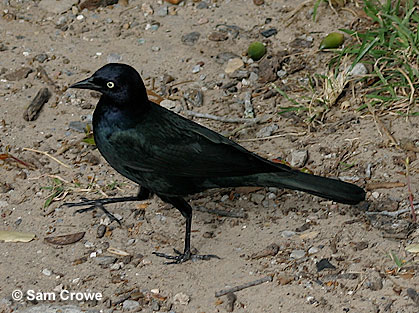
This species occasionally flies into the air to catch insects and also take advantage of tilling operations and other farming practices that disturb or flood the soil. When these practices scare insects and other small animals out of hiding, the blackbirds catch and eat them.
In winter, large flocks can feed together in open fields. Just like in the summer, they walk along and pick food off the ground, especially seeds and spilled grain. As the flock forages, every once in a while, the birds in the back of the flock fly up together to move to the front of the flock.
Nesting and Eggs
The female Brewer’s Blackbird uses twigs, grass, and other bits of vegetation to craft a bowl-shaped nest. She can also include hair and feathers, and use bits of mud and manure to help cement the nest together.
The nest has a fairly wide opening about 4.5 inches in diameter and is built in a variety of places. It can be on the ground, in a crevice, in a shrub, or high in a tree.
However, no matter where the nest is built, since this species is a colonial nester, it is always placed in the same area as other nesting Brewer’s Blackbirds.
Nesting colonies are always near water, often adjacent to irrigation ditches, ponds, rivers, and other types of wetlands.
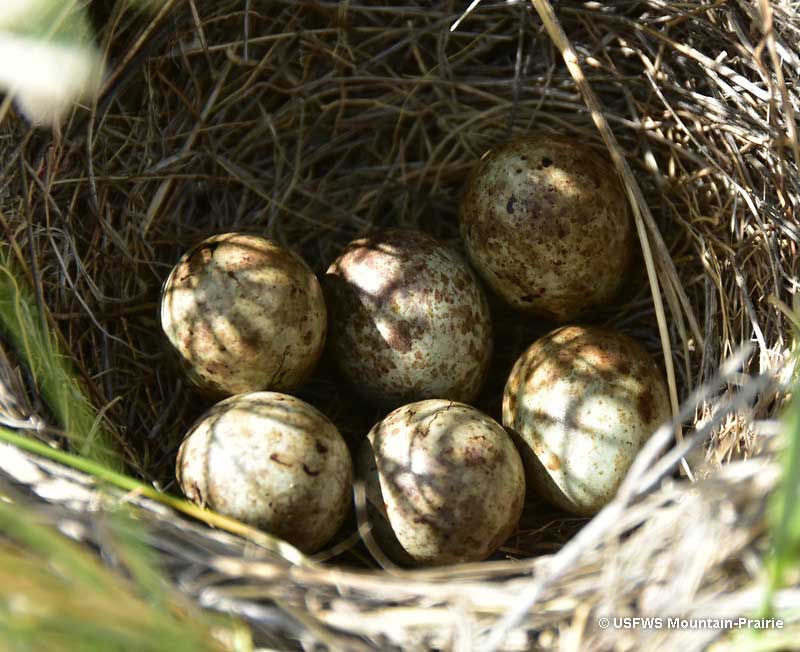
The female lays 5 eggs and incubates them for 12 to 13 days. The eggs weigh around .16 ounces each and are grayish green with varying amounts of reddish or violet spotting, speckling, or blotches.
After hatching, nestlings are brooded by the female and fed by both parents. They quickly grow and leave the nest 13 days later. At this time, they stay in grass near the nest and continue to be fed by their parents for around three weeks. By then, the young birds become independent and forage on their own but still with the colony flock.
Current Situation
The Brewer’s Blackbird lives in a variety of places combining open areas with short grass and scattered perches. They can live on golf courses, college campuses, in suburbs, on many farms, and many other similar situations.
This bird breeds near water but forages in open habitats. In winter, they use similar types of habitats and flocks often forage in farm fields.
Brewer’s Blackbirds breed in western Canada north to parts of the Northwest Territories, east to Ontario, in much of the western USA, and in parts of the Great Lakes region. They winter in the western and southern USA, and Mexico.
This species is listed as Least Concern in the IUCN Red List. The Brewer’s Blackbird is common to abundant in most parts of its range.
It is well adapted to living with people and can form impressive flocks of hundreds or even thousands of birds.
Facts
- This species benefits from people and has greatly increased in numbers during the twentieth century. Although it used to only be a western species, the Brewer’s Blackbird now occurs east to Ontario and winters in much of the southern USA.
- Brewer’s Blackbirds are sometimes accidentally killed during pest control operations aimed at other, harmful blackbird species. This doesn’t seem to affect their numbers but is still a shame because this species is beneficial. It helps control insect pests and does not destroy crops.
- Brewer’s Blackbird eggs show a wider variety of patterns and colors than most other birds. One adaptation for this variation may be to help camouflage their eggs in a variety of habitats and nesting situations.
- Although this species doesn’t usually perch on feeders, it will happily feed on seeds on the ground.
Similar Species
The Brewer’s Blackbird is similar to some other blackbird species. However, it can be separated from other birds by focusing on certain characteristics.
Rusty Blackbird
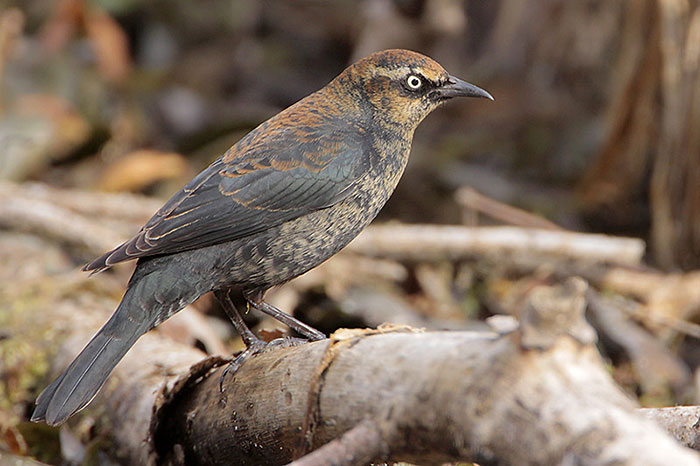
Photograph © Greg Lavaty
Male Rusty Blackbird looks a lot like a male Brewer’s Blackbird but, in summer, is duller black, has a slightly thinner beak, and a slightly shorter tail. Its song also lacks the buzzy sounds of the Brewer’s Blackbird.
Common Grackle
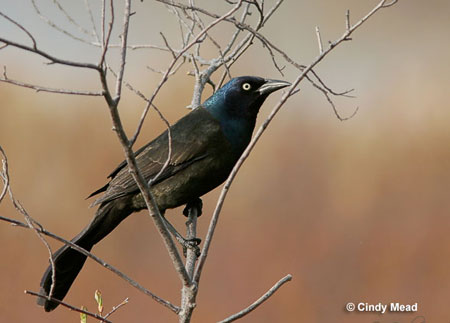
Common Grackles have similar coloration, but they have a longer, wedge-shaped tail and a thicker, stronger beak.
Bronzed Cowbird
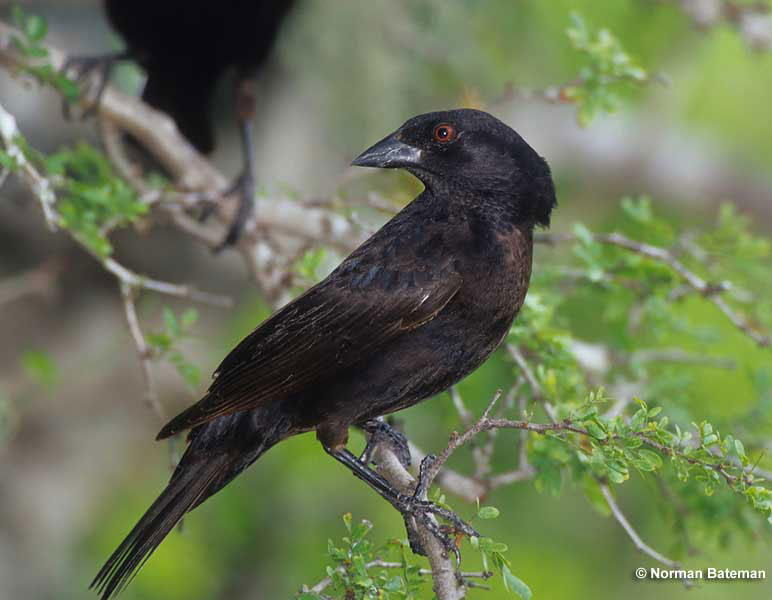
Bronzed Cowbirds and other cowbird species have shorter tails and thicker, more finch-like beaks.
Frequently Asked Questions
Where do Brewer’s Blackbirds live?
Brewer’s Blackbirds live in parks, towns, golf courses, and many other places with short grass and scattered scrubs and trees.
What is the difference between a Brewer’s Blackbird and a Common Grackle?
The difference between a Brewer’s Blackbird and a Common Grackle is that the grackle has a longer, wedge-shaped tail, and a thicker, stronger beak.
Are Brewer’s Blackbirds migratory?
Yes, Brewer’s Blackbirds in Canada and the northern USA migrate to the southern USA and Mexico.
Where do Brewer’s Blackbirds nest?
Brewer’s Blackbirds nest in colonies in trees or on the ground next to lakes, rivers, ditches, and other wetlands.