

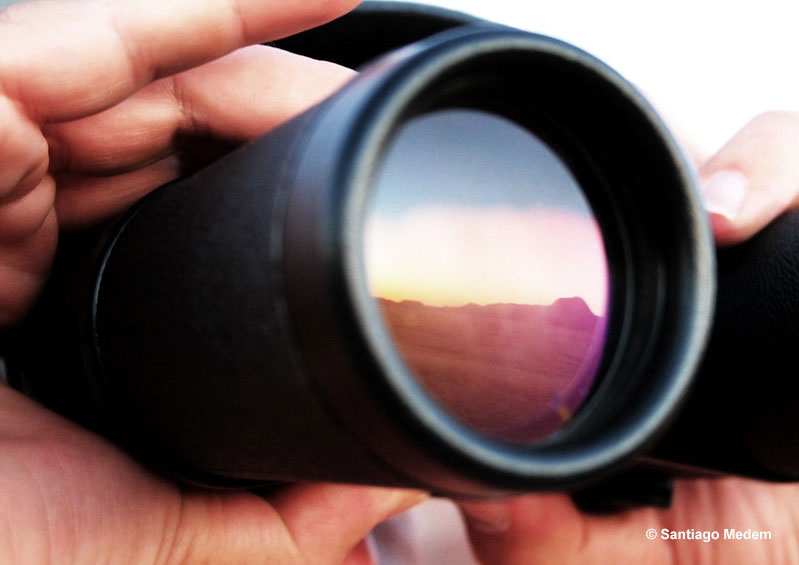
A good pair of binoculars is your most important tool in identifying a variety of birds or other wildlife. If you have never used good binoculars for this purpose, you will be amazed at the detail and color you will see. You will be exposed to a whole new world of fascinating observation.
On this page
- Binoculars for bird-watching
- Look for these features in birding binoculars
- Adjustment and Alignment of your Birding Binoculars
- What is the prism that everyone keeps talking about?
- Maintain the lenses of your birding binoculars
- Selecting a Pair of Birding Binoculars
- Design Quality of Birding Binoculars
- Why spend more on bird-watching binoculars?
Binoculars for bird-watching
There are several characteristics shared by all binoculars for bird watching. Your old pair of opera glasses does not have any of them.
We elicited the assistance of Sharon Stitler (aka the Bird Chick) for information on the selection of birding binoculars.
Look for these features in birding binoculars
For ready reference, here are some of the items covered by Sharon for the selection of bird-watching binoculars.
1. Magnification
Most binoculars will have a series of numbers, or specs printed on the body of the binocular, usually just below the eyepiece. You will see a number like 7×35, 8×42, or 10×50.
The first number, the 7, 8, or 10, is the “power” or magnification of the binocular. Objects seen through a 7x binocular will appear 7 times closer than they really are. Objects seen through a 10x binocular will appear 10 times closer than they really are.
Beginning birders sometimes think that high-powered binoculars (such as 12x or more) sound better, but most bird watchers prefer a 7x or 8x binocular. Lower powers do not provide enough magnification, and higher powers have a narrower field of view (making it harder to locate a bird using binoculars) and can be difficult to hold steady.
Improved optics from top manufacturers of birding binoculars have made a 6x magnification an acceptable option. In general, the lower the magnification the smaller and lighter weight the binoculars will be.
2. Exit pupil – Light gathering capability & objective lenses
The second number is the diameter, or the objective lens size, which is the lens on the big end of the binocular. This measurement is given millimeters.
Thus a 7×35 binocular has a magnification of 7 times, and an objective lens with a 35 mm diameter.
The objective lens diameter has an effect on the amount of light or image brightness of the binoculars. In general, the larger the diameter, the brighter the image will be.
More specifically, the diameter of the objective lens divided by the magnification provides a good indication of the potential light gathering capability of the binocular. The higher the number the better, in terms of a bright image.
Using this formula for a 7×35 binocular means dividing 35 by 7, yielding a ratio of 5.0, which is considered good. Avoid binoculars that have a ratio much below 5, such as a 7×30 or 7×25. Good birding binoculars generally have a ratio of 5 or higher. Some high-end binoculars are fine with a 4.o ratio. I used a pair of Leica 10×40 binoculars for years, and they are still my all-time favorites.
3. Field of view
Another number that is usually printed on the body of the binocular is the field of view. A wide field of view makes it easier to locate a particular bird.
You will usually see the field of view measured either in terms of viewing angle (6 degrees, for example), or the number of feet (such as 400) at 1000 yards. The best birding binoculars will have a wider field of view, greater than 6 degrees or greater than 300 feet at 1000 yards.
4. Close focal distance
Another key factor in selecting the right pair of birding binoculars is the shortest distance at which the binoculars can focus. Some of the less expensive binoculars available in the department and discount stores will only focus down to about 30 feet.
There will be many occasions when you will want to be able to focus to a much closer distance than this. Some binoculars designed for bird watchers can focus to as close as 5-6 feet. These are also excellent for watching dragonflies and butterflies, something many birders eventually become interested in.
The close focus distance is not usually marked on the binoculars. You’ll have to test them yourself, ask the person from whom you are purchasing the binoculars, or consult the detailed product specifications.
5. Eyeglasses relief
The eye relief measurement determines how far your eye can be from the eyepiece while still allowing a full field of view through the binocular. This is important to eyeglass wearers. Look for a high eye relief design if you plan to wear glasses while using your binoculars. Eye relief of 15 mm or greater is recommended to provide you with the widest possible field of view.Tocula Tltiu
Adjustment and Alignment of your Birding Binoculars
Before you start to use a new pair of bird-watching binoculars you should check them for alignment and adjust the focus for your eyes.
Focus adjustment
All quality binoculars for bird watching provide independent focus adjustment of each eyepiece. The actual procedure varies from one pair or manufacturer to the next. In general the process is something like this:
The center focus knob is used to focus in on specific, distant object. It is the prime focus for the binoculars and one of the eyepieces.
The other eyepiece will have a further adjustment to compensate for focus differences between your eyes. Check the user manual for your binoculars to determine which eyepiece has the additional adjustment and where it is located. The adjustment is often right on the eyepiece but can be located above or below the central focus knob.
To set the focus adjustment:
- Select a distance object on which to focus
- Focus on the object using the center focus knob.
- Close the eye that is viewing through the eyepiece with the fine adjustment and refocus on the object as needed.
- Close the other eye and look through the eyepiece with the fine adjustment. Make any focus adjustments needed with the fine adjustment for that eyepiece.
That’s it! Your binoculars are now calibrated for optimal clarity. Some binoculars have a scale on the eyepiece with the fine adjustment. This can be used as a quick reference for checking the focus. Especially useful when sharing binoculars for bird watching.
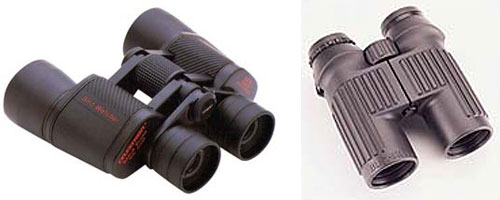
Alignment of birding binoculars
Binoculars that are not properly aligned can make focusing difficult and result in a headache after long use. You should check the binoculars for alignment before purchase, if possible, or immediately after receiving them. You can check the alignment with the following steps.
- Adjust the binocular focus using the steps above.
- Focus on a distant, horizontal straight line. The top of a home or building works fine.
- Holding the binoculars as steady as possible (use a tripod if possible), position the binoculars about 8 in. in front of your eyes.
- Alternately look through each barrel by closing one eye at a time.
The height of the straight line (rooftop or building) should appear at the same position when looking through both barrels of the binocular. If the lines are at different levels, the binoculars are out of alignment.
It can take a little practice to make this technique work, so give it a couple of chances before reaching a conclusion.
Repairing a pair of binoculars that is out of alignment is a bit tricky. If such a situation exists, the binoculars should be returned to the manufacture for repair.
Proper care and cleaning of your binoculars will help ensure the best image and longest life. Here are a few items to consider.
What is the prism that everyone keeps talking about?
You might have seen terms such as prisms, roof prisms, or roof-prism binoculars. For a beginner, choosing a good pair of binoculars, it can be difficult to orient between the fancy terms.
Simply said, a prism is used to correct the orientation of the image. Without prisms, the image in binoculars would be upside down and reversed from left to right. Prisms help to ensure that the observed image appears upright and correctly oriented.
Maintain the lenses of your birding binoculars
Clean the lenses with a lens cloth or lens paper. Cleaning fluid especially designed for precision optics is inexpensive and readily available. Avoid cleaning the lenses with a paper towel or shirttail. While they may appear soft, their use will hasten the removal of critical lens coatings.
Dirt and grime
Dirt and grime can be removed from the binocular body using a damp cloth.
Moisture
In general, avoid getting your binoculars too wet. Excess moisture can fog internal lens surfaces. If they do become wet, dry as much as possible with a soft rag and place in a warm, dry location. Quality bird-watching binoculars are sealed and filled with nitrogen or other inert gas. If moisture shows up on the inside of a binocular with a sealed design it should be returned to the manufacturer for repair before further damage can occur.
Sand
If sand infiltrates the moving parts of your binocular it can be a very big problem. Use care when birding on the beach. If your binoculars are dropped into the sand, brush them off completely and slowly adjust the focus. If the focus is rough, there may be sand inside the adjustment mechanism. At this point, the best option is to send the binoculars to a repair facility for cleaning. Continued use may lead to irreparable damage.
Selecting a Pair of Birding Binoculars
When it comes down to making that final decision, try to visit a store where you can try out several models. The final decision often boils down to personal preference.
When making a selection, consider the following features.
- Cost – Purchase the best quality you can afford. No need to go above $300 – $400 unless you are purchasing for an expert birder or just want the prestige of owning the very best.
- Seize and weight – Binoculars with a higher magnification are generally heavier and larger. Pick a pair you can manage over several hours of birding.
- Balance – the binoculars should be balanced and feel comfortable in your hand.
- Magnification – we suggest 7×35, 7×42, 8×40 or 8×42, (10×40 is OK for the more experienced birder).
- Field of View – Minimum 6 degrees or 300 feet at 1000 yards.
- Close Focal Distance – 20 feet or less (10 feet or shorter preferred).
- Eyeglass compatibility – Rubber or roll-up eyecups, with 15 mm minimum eye relief. If you wear glasses, this can be one of the most important considerations. Make sure the pair you select easily accommodates the glasses you are wearing. This is one area in which more expensive binoculars excel.
Clay Taylor, with Swarovski Optics, was kind enough to share some additional thoughts on the selection of bird-watching binoculars.
Design Quality of Birding Binoculars
Binoculars can range in price from under $100 to $2000 or more. So what’s the difference? Some of the important considerations include:
- Sharpness of image
- Light-gathering ability and image brightness
- Shock resistance
- Water, dust and moisture resistance
- Size and weight
- Long life
The image quality of $300 binoculars has improved to the point that it is hard to see much improvement in a $1500 pair of binoculars. Improvements in the glass used in the manufacture of the lenses and (especially) lens coatings have filtered down to the lower-cost optics. Unless the user is moving into the semi-pro range, spending more than $300 or so is not necessary for most people.
Although binoculars are pretty lightweight nowadays, there is still the question of size. Higher-end binoculars tend to be bulkier (due to lens diameter and other considerations), but some prefer more compact binoculars.
Why spend more on bird-watching binoculars?
Very expensive bird-watching binoculars do have their advantages.
- Better image quality.
- Better light gathering ability and light transmission, useful in low light conditions and birding in the tropics. Dusk and dawn are the best times for birdwatching, so depending on your hobbies, this might ce crucial.
- The design, materials, and manufacturing quality produce a very rugged binocular.
The last item may be the most important. No one wants to travel hundreds or thousands of miles on a birding trip, only to have the binoculars knocked out of alignment while chasing the trip bird. More expensive birding binoculars can really take a beating with little damage to their performance.